Blog
Yeap Cloud Blog
Engineering stories, product updates and practical guides from the Yeap Cloud team.
Yeap CDN's new edge: why we chose Rust
We replaced our CDN edge with a new in-house version built in Rust on Pingora. Here is what it means for your site: faster connections, configuration that applies in seconds, and stronger isolation and security.
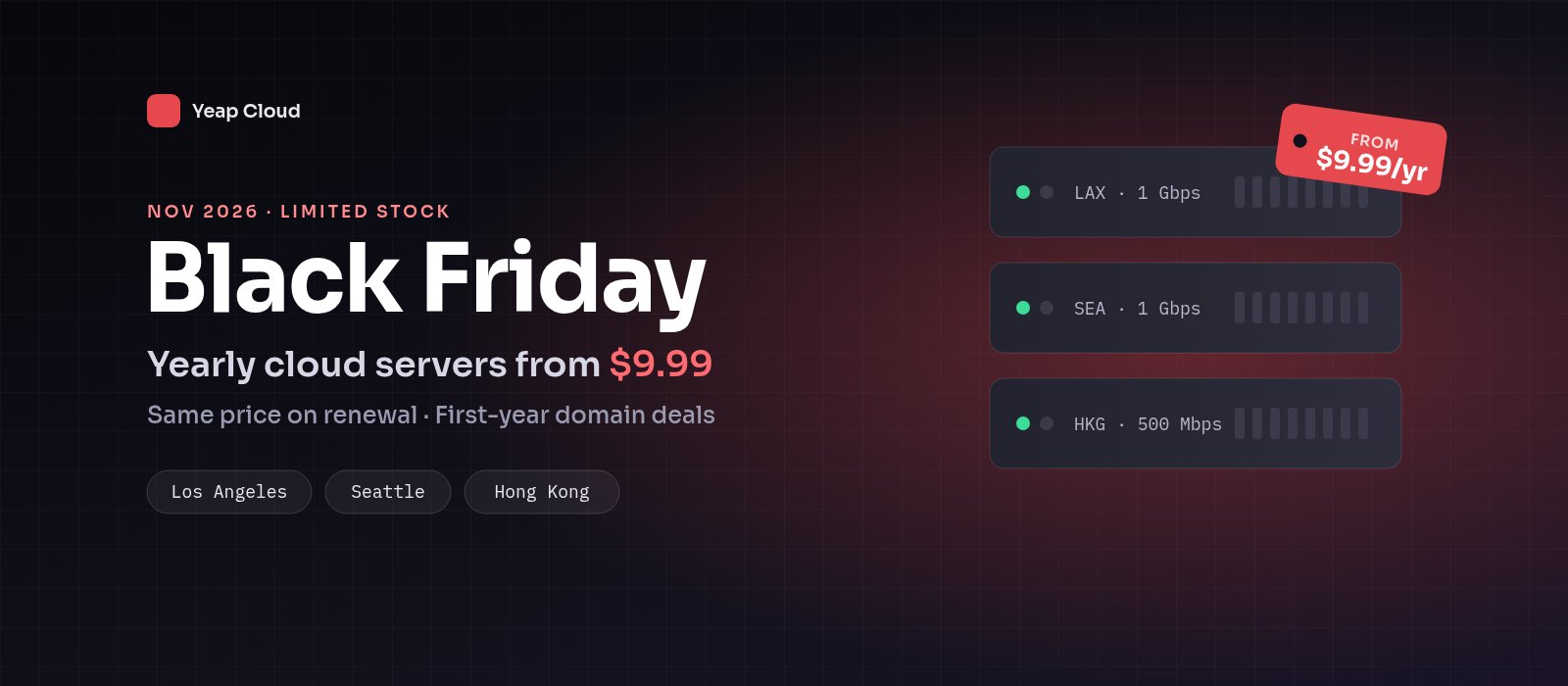
Black Friday 2026: Yearly Cloud Servers from $9.99 and First-Year Domain Deals
Yearly cloud servers in Los Angeles, Seattle and Hong Kong from $9.99, renewing at the same price, plus lower first-year prices on .com, .net, .org, .me, .dev and .app. Servers until December 4, domains until November 30 (Pacific Time).
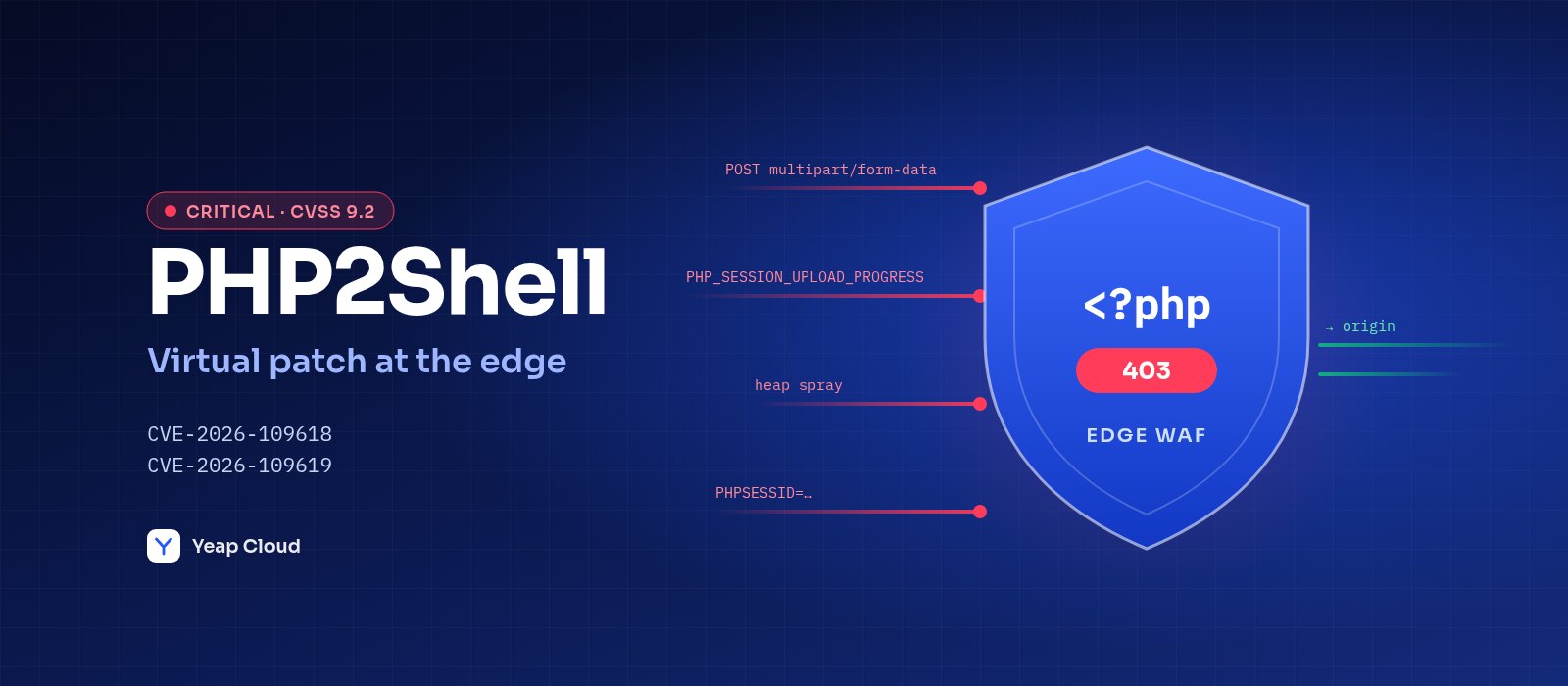
PHP2Shell (CVE-2026-109618/109619): How We Virtual-Patched It at the Edge
Two critical PHP advisories allow unauthenticated RCE through an OOM bailout and stale global state. Here is how the bugs work, what Yeap WAF blocks at the edge on day one, and what you still need to fix on your origin.
TLS Session Resumption and HTTP/3 on the Edge
Session resumption lets returning visitors skip a full TLS handshake. Why ticket keys have to survive restarts, how we rotate them safely, and how HTTP/3 on our edge reuses the same request pipeline.
Put Your Website Behind Yeap CDN with Free HTTPS in 10 Minutes
A step-by-step walkthrough for putting an existing site behind Yeap CDN: add the domain, configure the origin, connect via CNAME or NS, get a free Let's Encrypt certificate, choose an SSL mode, force HTTPS, and verify with curl.
A Practical Guide to Cache Purge: From Cache Keys to Variant-Level Purging
Purged the cache but still getting hits? Most of the time the answer lies in the cache key. How Yeap CDN builds cache keys, how query-string modes work, and exactly what a URL purge removes with and without a query string.
Getting Started with the Yeap LLM API Using the OpenAI SDK
The Yeap LLM API is OpenAI-compatible: keep your SDK and point base_url at https://llm.yeap.cloud/v1. Covers creating a key, Python and Node.js examples, streaming, embeddings, and per-key quota, model and IP limits.
How Our DNS Picks Nameservers for Your Zone
Every zone hosted on Yeap DNS gets a pair of nameservers. That pair has to be stable, spread out, and actually able to answer. How our hash-based allocation works, and why "status is intent, heartbeat is fact".